


Índice
Playing in wet conditions changes ball behaviour more than it seems. In a coastal setting, where air and ground retain moisture easily, this is especially noticeable on iron shots into the green: the flight can come out a bit higher, with less stopping power on landing, and with more variability between clean strikes and slightly contaminated contact.
The good news is that you can adjust the spin with irons in golf, above all, distance control without overcomplicating it. Here is a practical, objective approach that works whether you compete or simply play for enjoyment. Adjust iron spin wet conditions golf.
What really happens when it’s wet
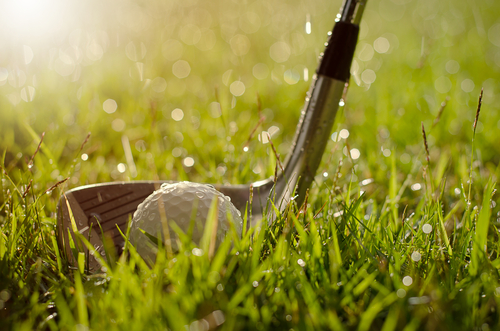
Spin (backspin) depends largely on friction between the clubface and the ball at impact. When a thin layer of water or grass gets between them, friction drops and contact becomes more “slippery”. In that situation:
- Spin usually decreases.
- Launch angle can increase, because the ball slides more up the face.
- The likelihood of a “flyer” from wet grass increases: the ball comes out hotter, with less spin, and can go long.
These effects are documented in launch monitoring measurements and technical analysis of face-ball interaction in wet conditions.
Adjust iron spin wet conditions golf

Prioritise a dry, clean strike
In wet conditions, the difference is not a radical swing change, but the condition of the clubface and the ball on each shot.
Concrete actions:
- Dry the iron face before you hit (towel on the cart or under an umbrella).
- Clean the grooves with a brush if there is mud or compacted grass.
- Dry the ball when the applicable procedure allows it.
Grooves are designed, among other things, to channel moisture and debris and help maintain effective friction.
Change the goal: less “bite”, more “land”
When spin drops, the most reliable way to stop the ball is to increase the descent angle and choose a more conservative landing spot.
Adjustments that often improve results:
- Take one more club and make a more controlled swing (less all-out, same intent for rhythm).
- Choose slightly higher trajectories when wind allows.
- Aim at a safer centre of the green: in wet conditions spin varies more, and the reward for firing at a flag is often smaller than the risk.
Adjust the impact point on the face
With irons, slightly low-face contact can reduce useful spin and change height. In wet conditions, the priority is to centre the strike.
Simple warm-up drill:
- On the range, hit 10 balls trying to produce the same flight every time.
- If your height dispersion is large, focus on tempo and balance before trying to hit harder.
The goal is not to force more spin, but to reduce variability.
Check the condition of the grooves and the face
Worn grooves or a heavily battered face can make spin loss in wet conditions more pronounced.
Typical signs:
- It is hard to stop the ball even with well-executed shots.
- With the same iron, sometimes the ball comes out “dead” and other times it flies long.
Ball choice: look for control, not only distance
Without getting into specific brands, there is a consistent technical criterion: balls designed for control tend to provide better spin response, especially on scoring shots. In wet conditions, even with a good ball, water reduces friction; the important thing is choosing a ball that does not further penalise your control when you need precision.
What you should avoid
- Trying to “manufacture spin” only with the wrists or a more aggressive hit: in wet conditions this usually worsens contact control.
- Looking for solutions with substances or treatments on the face to increase grip. Besides being impractical, equipment rules restrict applying substances to the club to affect performance (beyond cleaning it).
The next steps

From Golf Alcanada, we recommend a mini plan for your next golf round
- Keep a towel handy and use a fixed routine: dry face and dry ball if applicable.
- If the fairway is wet or the grass is damp: one more club, controlled swing.
- Smarter target: prioritise centre of green and height over “bite”.
- If you get a flyer: treat it as a lie warning and, on the next similar shot, repeat the conservative plan.
Frequently asked questions
Does wetness always reduce spin with irons?
In practice it often does, because a thin film of water or grass between face and ball reduces friction and makes contact more slippery, but it does not happen the same way on every shot: if impact is very clean and the face is dry, the loss can be minimal; if there is contamination (water, mud, grass), spin drop and flyer risk increase.
What is a flyer and how do I anticipate it?
It is a shot that goes longer than expected, usually with less spin and a flight that feels “hotter”, typical from damp grass or low-friction lies; to anticipate it, read the lie (ball slightly sitting down with grass between face and ball), take one more club with a controlled swing, and choose a more conservative landing spot.
Should I open the face to generate more spin?
Opening the face increases dynamic loft, but it does not guarantee more spin if friction is compromised by moisture; in fact it can increase variability and hurt distance control, so it is usually better to centre the strike, keep the face dry, and use a height-and-descent-angle strategy.
Won’t one more club and a softer swing reduce control?
On the contrary: in wet conditions, one more club with a more controlled swing often improves centred contact and distance consistency, because it reduces the need to “hit at it”; the key is stable acceleration and not decelerating the club, only lowering maximum effort.
How important are iron grooves when the course is wet?
Very important: grooves help channel moisture and debris to support effective friction, so if they are very worn or packed with mud/grass, spin drops more and dispersion increases; keeping them clean during the round and checking wear if you consistently lose control is one of the most cost-effective steps.
Does switching balls help control spin in wet conditions?
It can help, with nuances: a control-oriented ball tends to retain better performance on scoring shots than a distance-only model, although wetness will still reduce friction; if you want consistency, the biggest gains usually come from drying/cleaning routines and adjusting club and target, rather than expecting the ball to “fix” spin on its own.
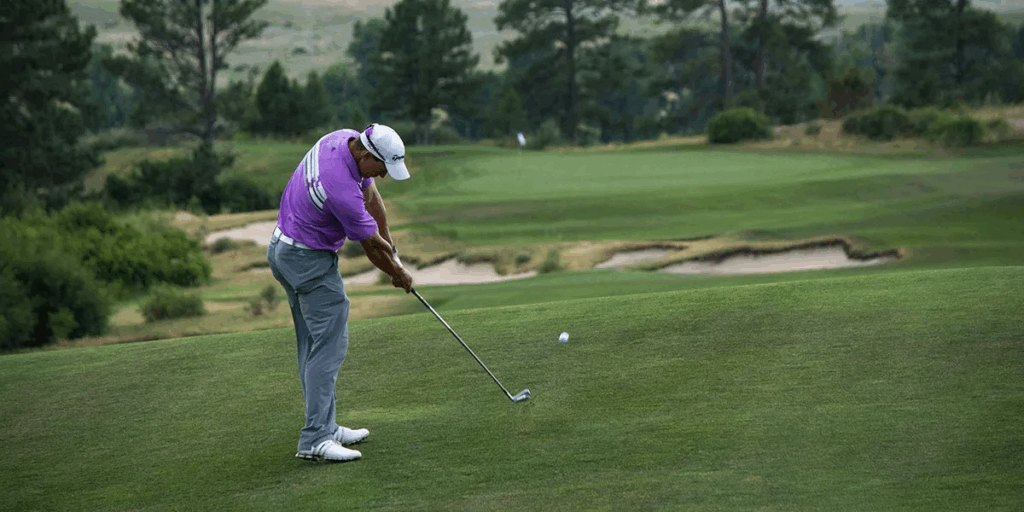
In wet conditions, adjusting your iron spin isn’t about technical wizardry, but about controlling what you can: friction, centered contact, and club/target decisions. Apply these tips at our driving range and get advice from our golf professionals of Golf Alcanada. Don’t hesitate to contact us through our website.
Get ready to perform your best on the green with our essential guide on what to pack for your Mallorca golf getaway
Learn to interpret the slope to make better decisions on the course and optimize every shot on demanding yet balanced layouts
Hybrids offer greater ease of use, better feel and more reliable results, outperforming traditional long irons on the course
Find out why Golf Alcanada stands out as the best golf course in Mallorca thanks to its layout, facilities and high-quality experience
Practical guide on how sea salt affects golf equipment and the key measures to extend its lifespan
Golf Alcanada stands out in the north of Mallorca for its meticulous design and technical challenge, establishing itself as the ideal course for those who value strategy and analysis in the game
