





Índice
Playing golf in sea fog requires more than good technique: it calls for adaptation, patience and smart reading of the surroundings. Reduced visibility, moisture in the air and altered distance perception completely change how each shot should be approached. Far from being an insurmountable inconvenience, fog can become an ally if you know how to adjust your game.
At Golf Alcanada, where proximity to the sea means these conditions can appear at certain times of day, understanding these adjustments makes the difference between an uncomfortable round and a well-managed one.
Prepare for humidity and temperature shifts
Sea fog is not just a visual phenomenon; it brings with it high condensation and a drop in temperature.

- Grip is critical: Grips and gloves absorb moisture quickly.
- Clothing matters: The damp cold sensation can numb your muscles.
- The ball: A white ball can easily get lost in the mist.
In these conditions:
- Consider using a yellow or high-visibility ball.
- Carry several dry towels and spare gloves.
- Dress in layers to maintain body heat.
Adjust your visual references
With fog, the eye loses depth and contrast.
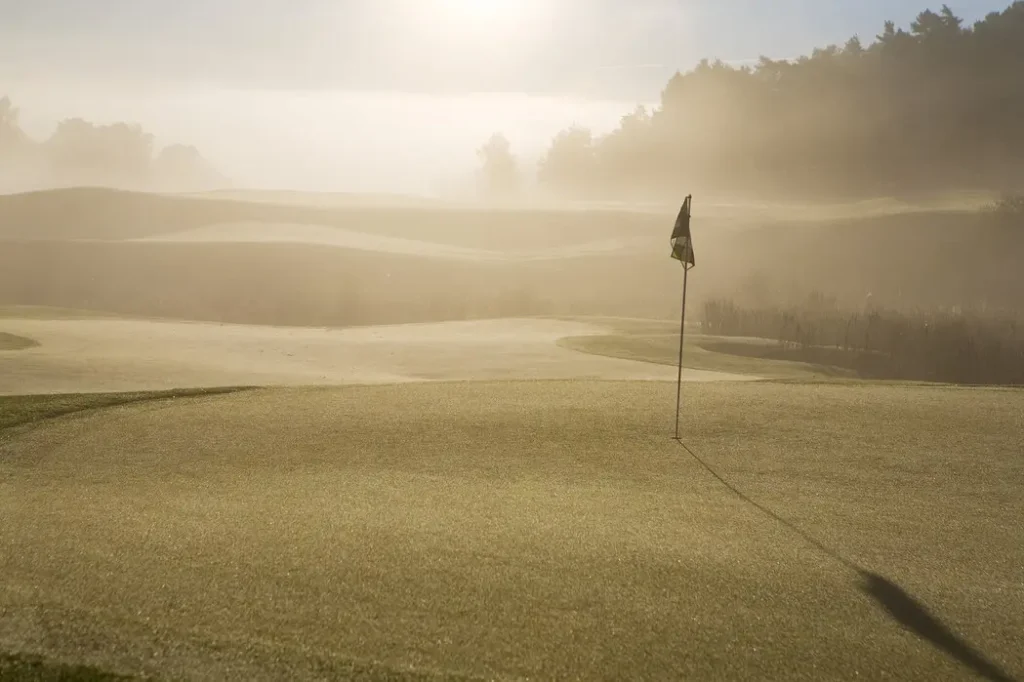
- Flags appear farther away than they really are.
- Green contours become blurred.
- Intermediate targets gain importance.
In these conditions:
- Use nearby references (trees, posts, bunkers).
- Trust known distances, not what “seems” right.
- Simplify the visual read of the shot.
Prioritise control over power
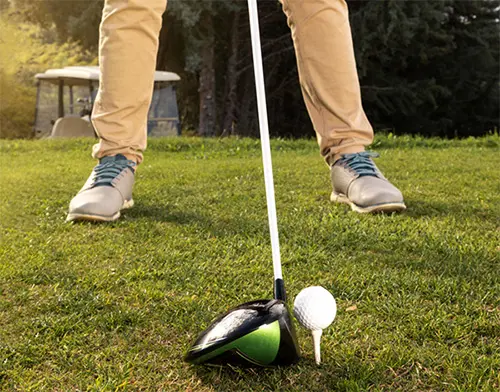
Moisture in the air and on the ground usually affects ball flight and bounce.
- Denser air slightly reduces distance.
- Damp ground slows roll-out.
- Poorly judged power is penalised more.
Therefore:
- Play one more club if in doubt.
- Reduce swing intensity.
- Look for controlled trajectories.
Keep the ball low and predictable
Fog alters perception of high ball flight.
- It’s hard to track the ball visually.
- Wind is less obvious.
- Aerial control decreases.
Low shots offer clear advantages:
- More stable trajectory.
- Less wind influence.
- Easier-to-repeat contact.
Trust your routine and rhythm

When visibility fails, doubt creeps in.
- Insecurity appears before the shot.
- Swing tempo speeds up or slows down excessively.
Here, routine is key:
- Always keep the same pre-shot sequence.
- Breathe and execute without improvising.
- Don’t change decisions at the last second.
Listen to the course, don’t just look at it
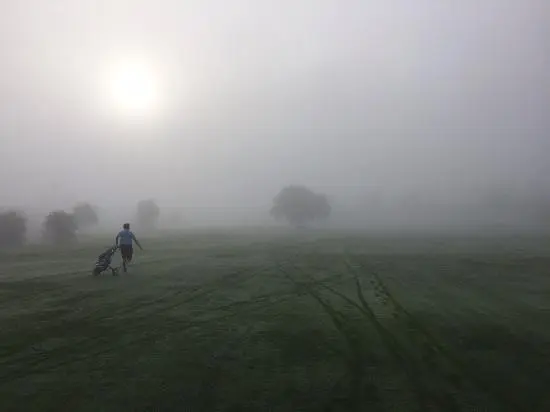
With fog, other senses become more important.
- The sound of impact provides information.
- Feeling the ground while walking indicates firmness.
- Moisture in the grass anticipates roll.
On coastal courses like Alcanada, this sensory reading is especially useful.
Adjust expectations and manage the hole
Fog is not for heroic plays.
- Accept playing the hole more conservatively.
- Prioritise leaving the next shot comfortable.
- Don’t force immediate results.
A solid foggy round is built shot by shot.
FAQs – Playing golf in sea fog
Does fog affect club selection?
Yes. Visual perception is misleading and targets often seem farther away. It’s common to need one more club, especially on long shots, and to prioritise control over power.
Is it normal to doubt more before hitting in fog?
Yes. Lack of visual references creates insecurity. That’s why it’s crucial to keep your pre-shot routine and trust known distances instead of improvising.
Does fog change green behaviour during the round?
It can. As moisture remains or increases, greens tend to be slower and more receptive, so adjust putting pace and observe how balls react on the first holes.
Should you modify your pace of play?
Yes, slightly—not to slow the round, but to play with more intention. Walking attentively, observing the surroundings and executing without rushing helps compensate for limited visibility.
Is fog a good time to practise or learn?
Definitely. Playing in fog forces you to develop feel, touch and course reading, skills that later improve performance in normal conditions.
Does fog increase error risk on tee shots and long shots?
Risk exists if an aggressive strategy is maintained. Lowering expectations, choosing safe lines and avoiding heroic shots significantly reduces mistakes.
Does fog affect all players the same way?
No. Players with good emotional management and confidence in their routine usually adapt better. Fog tests decision-making more than pure technique.

At Golf Alcanada, sea fog is a natural part of the landscape at certain times. Far from being an obstacle, it’s a perfect opportunity to develop a more intelligent, sensory and strategic game. Learning to adapt to these conditions will make you a better player in any scenario. Our PGA professionals and the club’s practice areas can help you train these adjustments so fog doesn’t limit your game, but improves it.
Book your next experience on our website and discover how to play well even when the course hides behind the fog.
Fewer clubs in your bag mean more creativity and better decision-making on every hole of our course.
A quick look at the golf apps amateurs rely on most and what makes them effective on the course and for getting better
A practical look at how a golf smartwatch helps with distances, stats and pace, and where it falls short compared with a laser on windy, strategic layouts.
At Golf Alcanada, the game transcends sport as the horizon shifts from trees to the endless blue of the Mediterranean.
More than just a course, Golf Alcanada is a model of environmental management protecting biodiversity and the landscape.
Learn to play golf in an idyllic setting with our exclusive guide for beginners at Club de Golf Alcanada, Mallorca
