


Índice
Talking about golf in a protected environment is not just about scenery. It is a delicate balance between enjoying the sport and genuinely respecting the land. When looking at golf courses in Mallorca, what makes the difference is not what is said, but what is done: how water is managed, how turf is maintained, how impacts are reduced, and how the surrounding biodiversity is protected.
At Golf Alcanada, we live this reality every day. We are in a particularly sensitive setting, with valuable Mediterranean ecosystems, and that demands a clear guiding idea: the course cannot be a bubble. It has to be part of the landscape and managed in a way that is compatible with it.
What it means to integrate a course in a protected setting
Integrating a golf course into a nature reserve or the surroundings of a protected area means accepting environmental priorities that sit above any aesthetic decision. The most important one is simple: the course must not degrade habitats or put water, soil, and air quality at risk. In practice, that requires planning, control, prevention, and continuous improvement.
It also means there are limits. Protected areas usually come with specific rules, and management has to adapt to them. That is why true integration is built through consistent processes: monitoring, responsible maintenance, and sound technical decisions.
Keys to real, responsible integration
1) Environmental planning and continuous monitoring
Sustainability is not a one-off action, but a system. Courses that coexist with protected settings often work with environmental plans that define objectives, measures, and controls. This makes it possible to make informed decisions, spot deviations, and correct them in time. When we talk about integration, this is essential: what is not measured cannot be improved.
2) Water management: the foundation in the Mediterranean
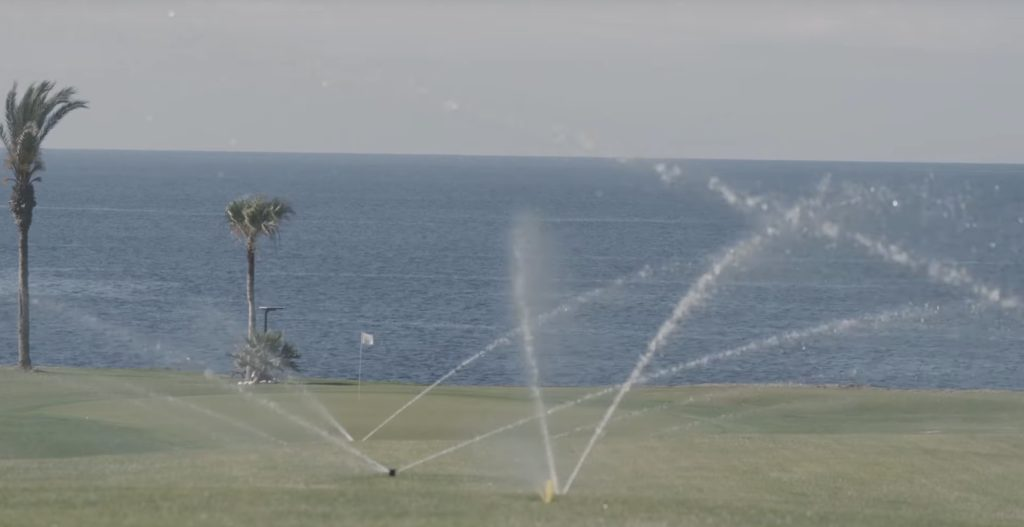
In an island, Mediterranean territory like Mallorca, water is the most sensitive resource. That is why integrating a course into its surroundings necessarily involves reducing consumption and using appropriate resources. At Alcanada, the approach follows that idea: relying on reclaimed water sources for irrigation and applying strategies to optimize every drop with irrigation systems adjusted to real needs, avoiding excess and prioritizing efficiency.
3) Biodiversity as part of the design, not decoration
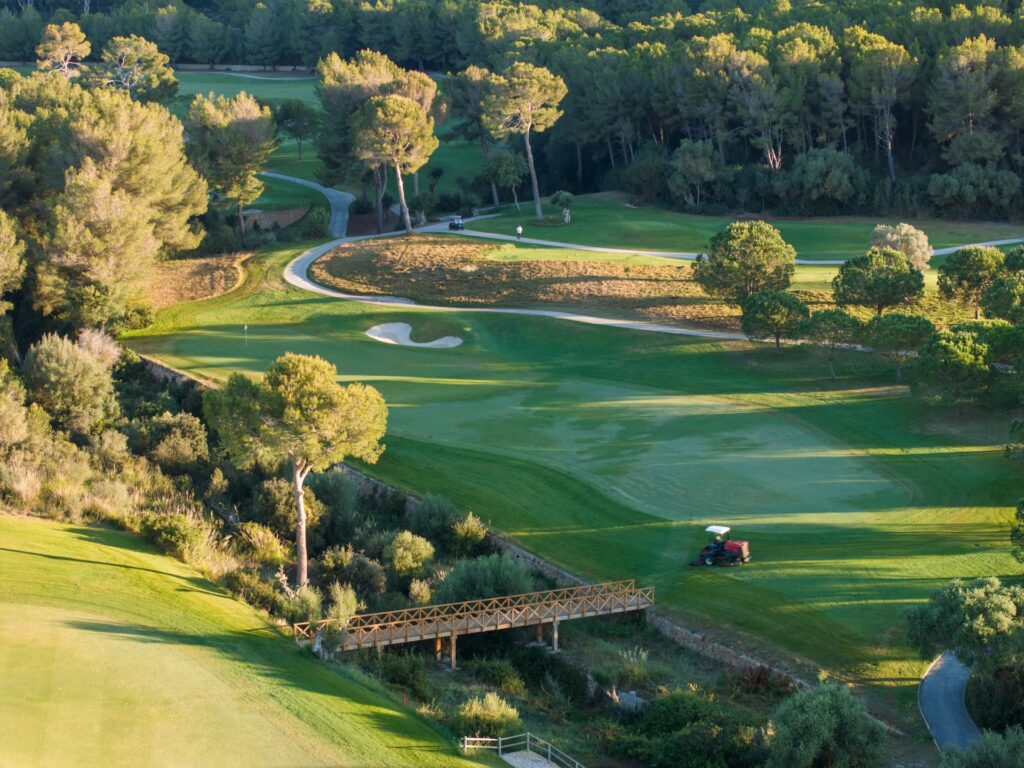
An integrated course is not only turf. Transition areas, scrubland, tree lines, slopes, paths, and out-of-play areas can become refuges for local fauna and flora when managed correctly. In that sense, biodiversity is not “added”; it is protected and enhanced through concrete decisions: creating habitats, maintaining natural corridors, and reducing pressure on sensitive areas.
4) Less chemistry, more prevention
Near natural areas, managing pests and diseases requires particular care. The priority is usually prevention before intervention: keeping turf balanced, choosing more resilient varieties, fine-tuning fertilization, and applying measures that reduce the need for plant protection products. When action is necessary, technical criteria and impact minimization must be the rule.
5) Landscaping adapted to the environment
A common mistake is trying to impose a “perfect green” model where it does not belong. In protected settings, the responsible approach is to adapt landscaping to the climate and local identity. That means prioritizing Mediterranean vegetation, reducing high-demand turf areas, and allowing the landscape to breathe. The result, besides being more sustainable, is often more authentic.
6) Energy, waste, and internal mobility
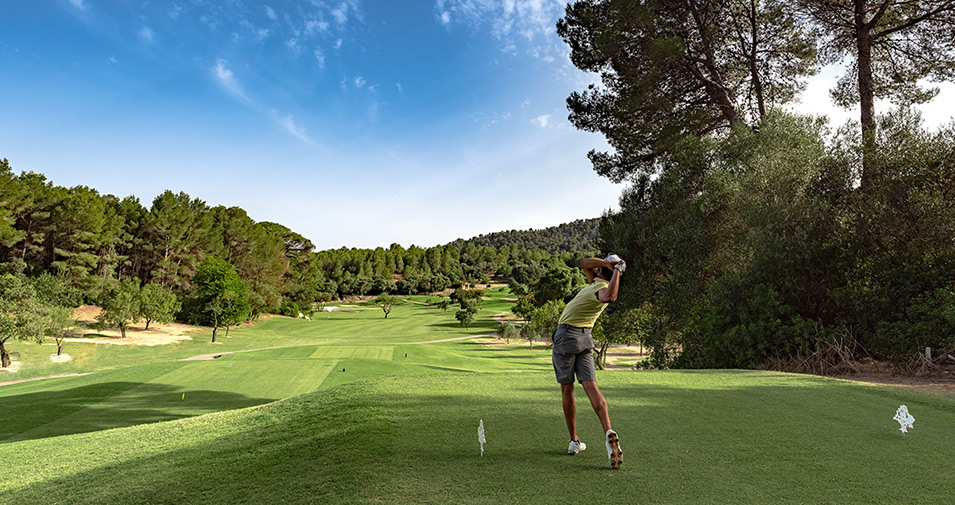
Integration is also measured in what you do not immediately see: electricity use, energy efficiency, waste management, and emissions reduction in daily operations. In courses that truly commit to coexistence with the environment, this is addressed through logistics: how staff move around, how equipment is powered, what gets recycled, how disposables are reduced, and how maintenance is optimized.
7) Transparency and environmental culture
When a course is linked to a sensitive environment, responsibility needs to be shared with the team, with players, and with the community. Outreach, environmental education, and transparency are part of integration. Explaining why certain decisions are made helps players understand that caring for the environment is also part of the experience.
Frequently asked questions
Can a golf course be inside or next to a protected area without harming it?
Yes, but it depends entirely on design and, above all, on management. The key is to minimize impacts on water, soil, and biodiversity, keep natural refuge areas, control inputs, and prioritize prevention over intervention. A beautiful location is not enough: what matters is daily operations and the controls in place.
What is the main environmental risk of a golf course in sensitive areas?
In the Mediterranean, water is usually the most critical point: both because of consumption and because of the risk of affecting aquifers and nearby ecosystems. That is why well-integrated courses prioritize suitable irrigation sources, reduce high-demand turf areas, and apply smart irrigation adjusted to real needs to balance playing quality with environmental responsibility.
What measures support biodiversity on a golf course?
The most effective measures are usually those that protect and connect natural spaces: conserving out-of-play areas as habitats, encouraging native vegetation, creating refuges for wildlife, installing features such as nest boxes where they make ecological sense, and maintaining green corridors. When managed well, a course can function as a mosaic of microhabitats that complements the surrounding environment.
Is it inevitable to use chemicals to maintain a golf course?
It is not inevitable to use a lot, but it may be necessary to intervene at specific times. Modern management aims to reduce chemical dependence through prevention: more resilient turf, balanced nutrition, controlling water stress, improving soils, and early monitoring. If treatment is required, it should be applied with technical criteria and the lowest possible impact.
Why should some courses avoid trying to be “all green”?
Because forcing a uniform green in a Mediterranean climate often increases water use, fertilization, and intensive maintenance. A responsible approach integrates the real landscape: local vegetation, transition areas, and a design that respects the character of the territory. It also tends to improve authenticity and coexistence with the environment.
What can players do to support sustainability on the course?
More than it seems: respect signage and conservation areas, avoid stepping on sensitive zones, do not feed wildlife, reduce waste, and understand that certain maintenance decisions are made to protect the environment. When players understand the reasons behind these measures, sustainability becomes a natural part of the experience.
If you feel like experiencing golf in a privileged setting in the north of Mallorca, we will be happy to welcome you at Golf Alcanada.
Book your tee time, discover the course, and see how we work so golf and the landscape truly coexist, with respect for the territory and an experience that lives up to it.
Learn to play golf in an idyllic setting with our exclusive guide for beginners at Club de Golf Alcanada, Mallorca
A practical guide to mitigating loss of control and ball flight variability when playing with irons on wet grass.
Latest Teycars buggies accelerate green credentials of top Majorcan venue Club de Golf Alcanada is introducing a new fleet of 42 electric golf buggies, accelerating its commitment to sustainability while further elevating the premium golf experience at the Mallorcan venue. The new buggy fleet, supplied by electric mobility experts Teycars, delivers improved sustainability, reliability, comfort…
Eliminate stress and ensure your victory by reviewing the essentials of our golf tournament checklist before your big day
A professional, course-management approach to studying the course before competing to make better decisions, cut avoidable errors and play with a clear plan from tee to green.
Hole 1 is golf’s ultimate mental challenge; mastering the opening tee shot at Alcanada is key to playing with control.
