


Índice
Scotland and England are home to some of the oldest golf courses in the world, places where the game has evolved alongside the landscape. Exploring their history helps explain what makes a course memorable and why certain venues continue to attract golfers from around the globe.
St Andrews Old Course: where a legend began
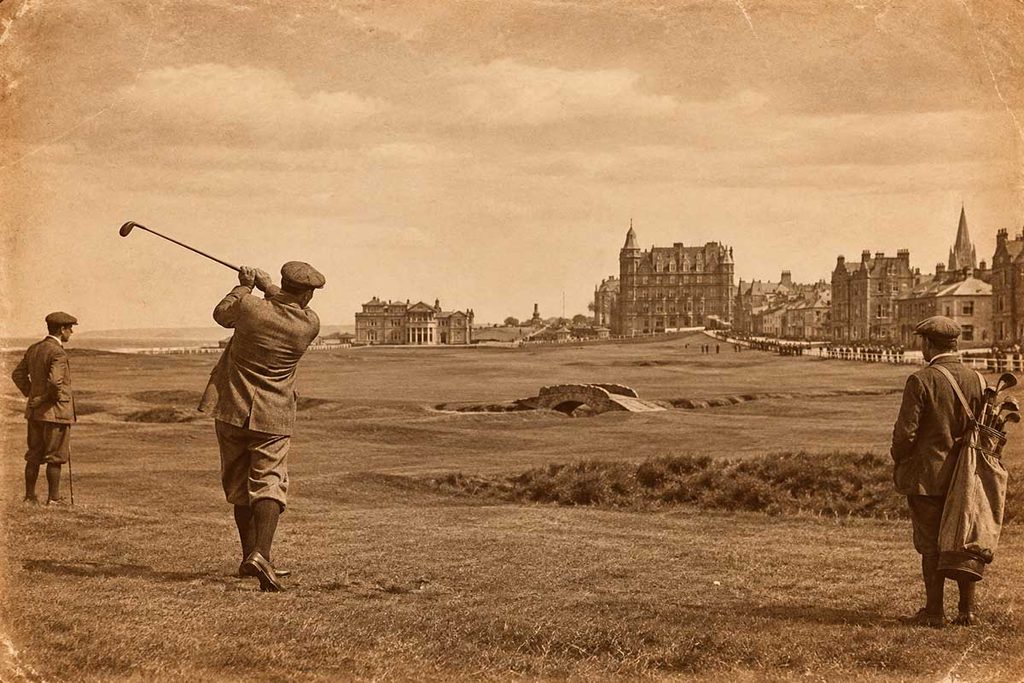
Few places are as closely associated with golf history as the Old Course at St Andrews, in Scotland. Its origins date back several centuries, and its influence can still be seen in the way the game is played today.
One of its most distinctive features is the use of shared greens, with several holes playing to the same putting surface. Deep bunkers, wide fairways and changing wind conditions add to the challenge. Choosing the right line and deciding where to leave the ball can be just as important as executing the shot itself.
At the 18th hole stands the Swilcan Bridge, crossing a small burn and now recognised as one of golf’s most iconic landmarks. Walking across it means becoming part of a tradition that has shaped generations of players.
Musselburgh Old Course: the early days of competitive golf
On Scotland’s east coast, Musselburgh Old Course holds an important place in the early history of organised golf. Local tradition links the game to the area several centuries ago, although the earliest references to golf in the region should be distinguished from the documented history of the present course.
Musselburgh hosted The Open Championship on several occasions during the 19th century. At the time, the championship was still establishing its importance, and competitive golf was beginning to spread beyond its traditional Scottish venues.
Its course is shorter than many modern layouts, offering a glimpse of an era when distances, equipment and playing conditions were very different. Its appeal lies both in that evolution and in its role during the early years of championship golf.
Royal Aberdeen: playing at the mercy of the land and the wind
Royal Aberdeen Golf Club was founded in 1780 and is one of Britain’s historic golf clubs. Its Balgownie course, north of Aberdeen, is a fine example of links golf, a style associated with many coastal courses across the British Isles.
Dunes and undulating fairways require players to adapt their strategy to each situation. The wind alters the ball’s flight, while firm ground encourages a running game that demands careful distance control. A shot that would finish on the green elsewhere may fall short or run well beyond the target.
The course has changed over the years, but it retains the defining features of traditional links golf. At Balgownie, knowing the distance to the flag is only part of the calculation. Players must also read the ground and anticipate how the ball will react.
Royal North Devon: golf among coastal dunes and grasslands
Royal North Devon Golf Club opened in 1864 and is widely regarded as the oldest golf course in England. It lies at Northam Burrows, on the coast of Devon, where the course shares an open landscape of dunes and natural grassland.
Conditions change with the wind and the state of the ground. Firm fairways encourage the ball to run, while vegetation and uneven surfaces can make recovery from an inaccurate shot more difficult. Strategy depends as much on club selection as on the ability to adapt to each hole.
Royal North Devon offers a glimpse of a style of golf in which the natural surroundings remain a defining part of the experience. Unlike courses designed to maintain a uniform appearance, it retains many of the features associated with traditional links golf.
Royal Blackheath: a history that predates modern golf
Royal Blackheath Golf Club, in Eltham, south-east London, traces its foundation to 1608 and claims a place among the oldest clubs associated with golf. That date is part of its historical tradition, although no conclusive documentation confirms the club’s origins in that year.
Its significance is linked to the spread of golf from Scotland into England and to the development of the social life surrounding the sport. For generations, clubs have served as places of competition and gathering, each with its own rules and customs.
Royal Blackheath’s history is a reminder that golf’s story extends beyond the course itself. The people who have kept a club alive and passed on its traditions are part of its legacy, even as facilities change over time.

What the courses that have endured have in common
These courses have different histories, but they share several characteristics that help explain their lasting appeal. The terrain influences strategy, the design calls for decisions, and each course presents challenges that cannot be overcome through power alone. The experience depends on reading the conditions and finding the right response on every hole.
Alcanada has a much more recent history, but its course already has distinctive features of its own. Robert Trent Jones Jr. designed the 18 holes to make the most of the terrain in this part of Mallorca, with Alcanada Lighthouse serving as a visual landmark throughout the round. What makes the experience special is the combination of the challenges presented by the course and the open views across the Bay of Alcúdia.
The club’s approach also includes practical sustainability measures, such as using donkeys to manage vegetation in certain areas without herbicides and incorporating solar energy into its buggy fleet.
Alcanada does not have centuries of history behind it, but it offers its own combination of thoughtful design, Mediterranean scenery and attention to the surrounding environment.
A course is remembered for what it offers the player
St Andrews stands out for its influence on modern golf; Musselburgh for its connection with early championships; Royal Aberdeen and Royal North Devon for the challenges of coastal links golf; and Royal Blackheath for its club traditions.
Each deserves a visit for different reasons. For golfers who travel with their clubs, discovering these courses also means experiencing different ways of playing and seeing how history and natural conditions shape a round.
In Mallorca, Golf Alcanada offers the chance to play beside the Bay of Alcúdia, with the lighthouse on the horizon and the Mediterranean accompanying the round. It is an experience worth discovering for yourself.
Golf Alcanada combines a course designed by Robert Trent Jones Jr., facilities to help you improve your game and a privileged location beside the Bay of Alcúdia.
What makes Alcanada such a distinctive venue for a tournament of this level?
A good pre-shot routine does not have to be long or complicated.
